


Treat Chronic Pelvic Pain After Endometriosis Surgery, Menopause, and Pelvic Floor Dysfunction with Acupuncture

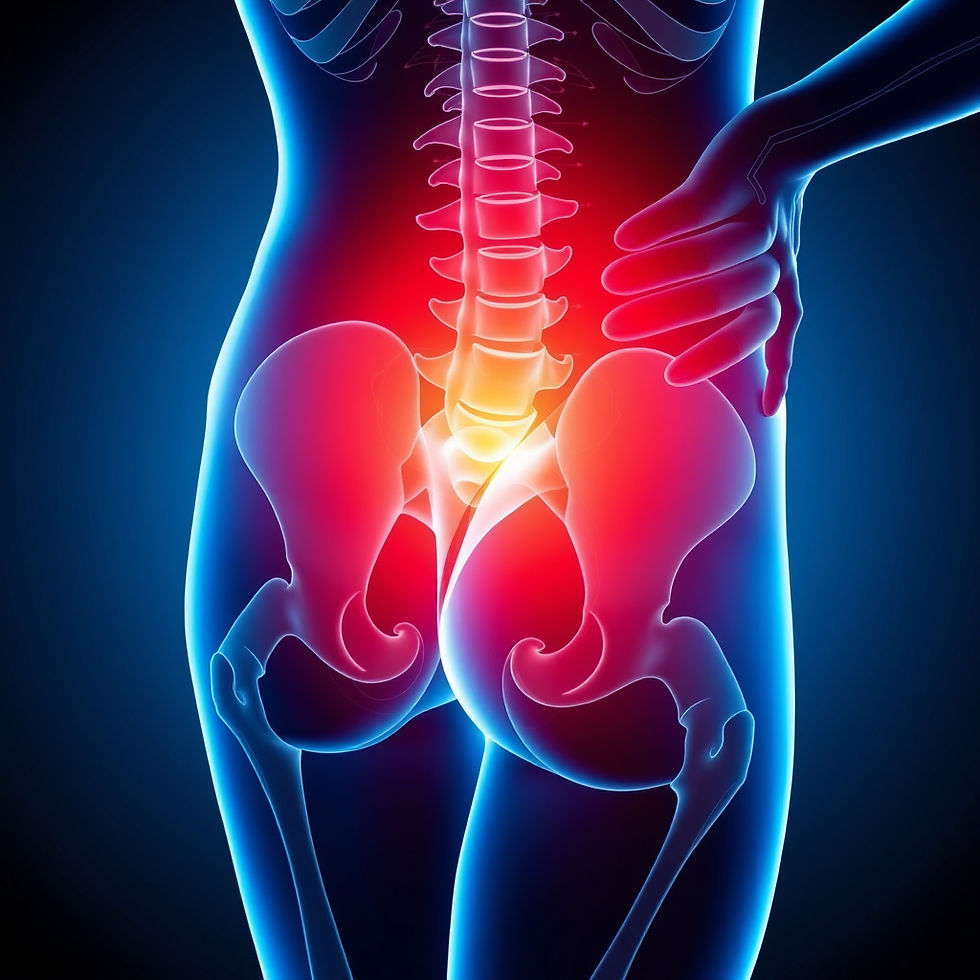
Endometriosis is one of the most common and important causes of chronic pelvic pain (CPP) in women. To put it simply:
Endometriosis is the underlying cause.
Chronic pelvic pain is its most typical and distressing symptom.
How Endometriosis Causes Pain
Cyclical bleeding and inflammation Endometriosis occurs when endometrial tissue (glands and stroma) grows outside the uterus (such as on the ovaries, pelvic peritoneum, uterine ligaments, or bowel surface). Just like normal endometrium, these ectopic tissues respond to ovarian hormones, undergoing proliferation, shedding, and bleeding. However, unlike menstrual blood from the uterus, this internal bleeding cannot exit the body. The “trapped blood” triggers chronic inflammation and pain.
Adhesions and pulling pain Inflammation and healing lead to scar tissue and adhesions, which act like “glue,” sticking pelvic organs (uterus, ovaries, fallopian tubes, bowel) together. When moving, during bowel motions, or intercourse, these adhesions pull and cause sharp or dragging pain.
Deep infiltrating endometriosis in severe cases, lesions grow into deep pelvic structures (such as the uterosacral ligaments or rectovaginal septum), compressing nerves and causing severe, persistent pain.
Acupuncture for Chronic Pelvic Pain
Acupuncture for CPP is not just “needling the belly.” It is a highly individualized treatment, combining TCM pattern differentiation with modern medical diagnosis.
Common TCM patterns of CPP include:
Qi stagnation and blood stasis
Cold and damp accumulation
Damp-heat obstruction
Kidney deficiency with blood stasis
Key acupuncture strategies:
Local points: CV3, CV4, Zigong, ST29 – regulate the uterus, improve blood circulation, relax abdominal muscles.
Distal points: SP6, SP10, Four Gates – harmonize Qi and blood through meridians.
Back points & essential points: BL32 (essential), BL20, BL23 – strengthen Spleen and Kidney.
Pelvic floor-related points: LR5, BL35 – for pelvic floor muscle pain.
Treatment is tailored since real-life cases are often more complex than textbook patterns.
When CPP Occurs After Surgical Menopause
Surgical menopause (removal of ovaries/uterus) is sometimes part of endometriosis treatment. However, pain may persist, and the disease mechanism shifts dramatically.
1. Pathogenesis shift: from Excess to Deficiency
Before menopause: Pain mainly from stasis (blood stagnation, Qi stagnation, cold, damp, or heat).After surgery: Ovarian hormones stop, leading to Kidney essence deficiency.
Now, pain arises from:
Kidney deficiency – lack of nourishment to uterus and meridians.
Residual blood stasis – surgical trauma and old adhesions.
Liver Qi stagnation – emotional stress and hormonal changes.
Spleen involvement – weak digestion and blood production, worsening fatigue and pain.
2. Core treatment principle
Tonify Kidney essence (root)
Invigorate blood, remove stasis, and relieve pain (branch)
Support the body (fu zheng) while gently eliminating pathogenic factors
3. Herbal examples
Liu Wei Di Huang Wan or Zuo Gui Wan for nourishing Kidney essence.
Tao Hong Si Wu Tang for activating blood and relieving stasis.Formula is adjusted, emphasizing supplementation over aggressive dispersing.
4. Acupuncture approach
Think of it as restoring an old building: first strengthen the foundation (Kidney essence), then gently clear blockages (blood stasis), and regulate the environment (Liver, Spleen, Shen).
When CPP + Surgical Menopause + Pelvic Floor Dysfunction Overlap
In some patients, chronic pelvic pain persists after surgery and menopause, complicated by pelvic floor dysfunction (PFD).
What happens with PFD:
Pain cycle: Long-term pain → pelvic floor tension and spasm → trigger points → pelvic floor muscles become independent pain generators.
New pain target: Even if endometriosis lesions shrink, the pelvic floor continues to “remember” pain.
Combined pathology: Kidney deficiency + blood stasis + liver-blood insufficiency → poor nourishment of muscles and tendons, leading to persistent spasm and pain.
Integrative Treatment Strategy
This requires three combined approaches:
Herbal medicine
Tonify Kidney essence, nourish Liver blood, relax spasm, move blood stasis.
Example: Shao Yao Gan Cao Tang for relieving muscle spasm.
Acupuncture
Frequency: 2–3 times per week initially, then reduce as stable.
Key points: local deep needling (BL32, BL35, Huiyang), distal regulation (LR3, LR5, SP6), plus electroacupuncture or moxibustion.
Self-care rehabilitation
Pelvic floor relaxation > contraction: Avoid Kegel exercises initially.
Diaphragmatic breathing: Gentle belly breathing to relax pelvic floor.
Gentle stretching: Hips, thighs, abdomen (happy baby pose, butterfly stretch, gentle squats).
Avoid strain: No heavy lifting, minimize long sitting, avoid constipation.
Heat therapy: Warm sitz baths (around 40°C, 15–20 minutes) relieve spasm and pain.
Conclusion: A Three-Dimensional Healing Model
For patients with endometriosis post-surgery, chronic pelvic pain, and pelvic floor dysfunction, TCM provides a comprehensive framework:
Herbal medicine – nourish, regulate, relieve stasis.
Acupuncture – target pelvic pain and muscle spasm.
Self-care & rehabilitation – breathing, stretching, heat therapy.
Only by combining these three levels can we break the vicious cycle of chronic pelvic pain and restore lasting relief.


Comments